
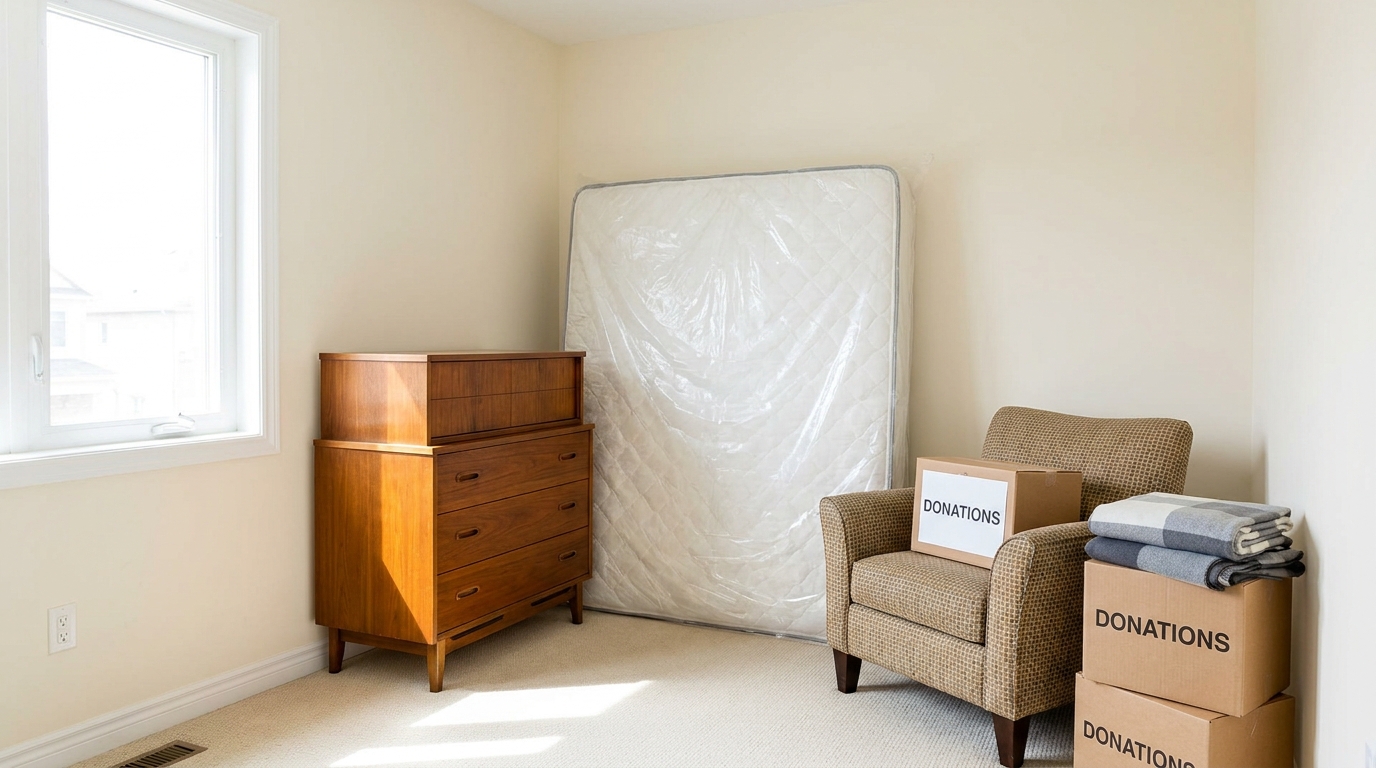
When clearing out a residence, downsizing, or updating your interior decor, donating functional household items to a local furniture bank keeps quality furniture out of landfills while supporting community members in need. However, regional furniture banks operate under clear health, safety, and dimensional guidelines to ensure that collected pieces fit the practical requirements of recipient housing units. Reviewing this comprehensive donor checklist helps clarify what items are needed most before booking a pickup or drop-off.
High-Need Essential Household Items
Furniture banks prioritize essential items that fulfill fundamental daily needs: sleeping, dining, and storage. The most urgently requested items include clean, stain-free Twin, Full, and Queen mattresses and matching box springs, sturdy metal or wooden bed frames, and kitchen dining tables with chairs. When donors contribute these foundational pieces, they directly enable families emerging from homelessness or housing instability to establish stable daily routines. You can review our official guidelines on our furniture donation guide page.
Living Room Furnishings and Compact Storage Units
Beyond bedroom and kitchen basics, compact living room furniture is in high demand. Clean sofas, loveseats, accent armchairs, coffee tables, end tables, and working floor lamps help transform empty living areas into welcoming gathering spaces. Compact storage furniture, such as three-drawer chest dressers, small nightstands, and narrow bookshelves, is especially prized because it fits comfortably into smaller apartment layouts without obstructing floor movement. Check out our first apartment furniture essentials guide for room-by-room layout advice.
Items Furniture Banks Cannot Accept
Due to strict sanitation guidelines, transport space limits, and safety regulations, furniture banks must decline certain categories of goods. Items that cannot be accepted include mattresses with visible stains, tears, or bedbug history; torn, frayed, or pet-damaged upholstered couches; broken furniture missing essential structural hardware; king-sized mattresses; waterbeds; and drop-side cribs. Additionally, oversized heavy entertainment centers and massive office armoires are generally declined because they cannot be safely transported or fitted through standard apartment doorways.
Preparing Non-Furniture Accessories
While furniture forms the core of donations, select small household accessories are also welcomed when donated alongside furniture. Working table lamps, clean small area rugs, and un-chipped kitchenware enhance home utility. Ensure all electronics operate safely and that lamps include working cords and shades.
How to Verify Item Eligibility Quick & Easy
If you are uncertain whether a specific piece meets donation standards, taking bright digital photos from multiple angles and submitting them to the donation team is the fastest evaluation method. Staff members review fabric condition, dimensions, and current warehouse capacity to confirm acceptance, ensuring a smooth and rewarding donation experience for everyone involved.
